I can make another video about what's wrong with public education. I've made plenty. I can write another article about testing, professional development, curriculum, or the people who make decisions in district offices. I've done that, too.
But something has changed.
People aren't just telling me they agree or disagree anymore. They're asking me to look into things. They're sending documents, telling me what happened in their districts, and asking whether anybody will actually put questions to the people in charge.
So that's what I'm going to do.
I don't work for a school district anymore. I'm not applying for a district job. I have a company, Pope Studios, a published book, a website, and a camera. More importantly, I know what it looks like inside a school. I spent years teaching, and years as an administrator sitting in the meetings where decisions were made.
Now I can ask the questions without being in those meetings.
Here is how this will work.
First, I pick a question that matters to children, parents, and teachers. Not a slogan. Something specific enough that a district can answer it and the public can check the answer.
Then I ask the same question across districts, request the policies and records behind the responses, and give the people making the decisions an opportunity to explain themselves. I'll share the answers, the documents, the gaps, and the follow-up questions. When it helps tell the story, I'll go to district offices, attend public meetings, and record short field reports.
The first question is about authority: Who actually decides what happens in a classroom?
Sunday's article explained why that question matters. Today I'm explaining what I'm going to do with it.
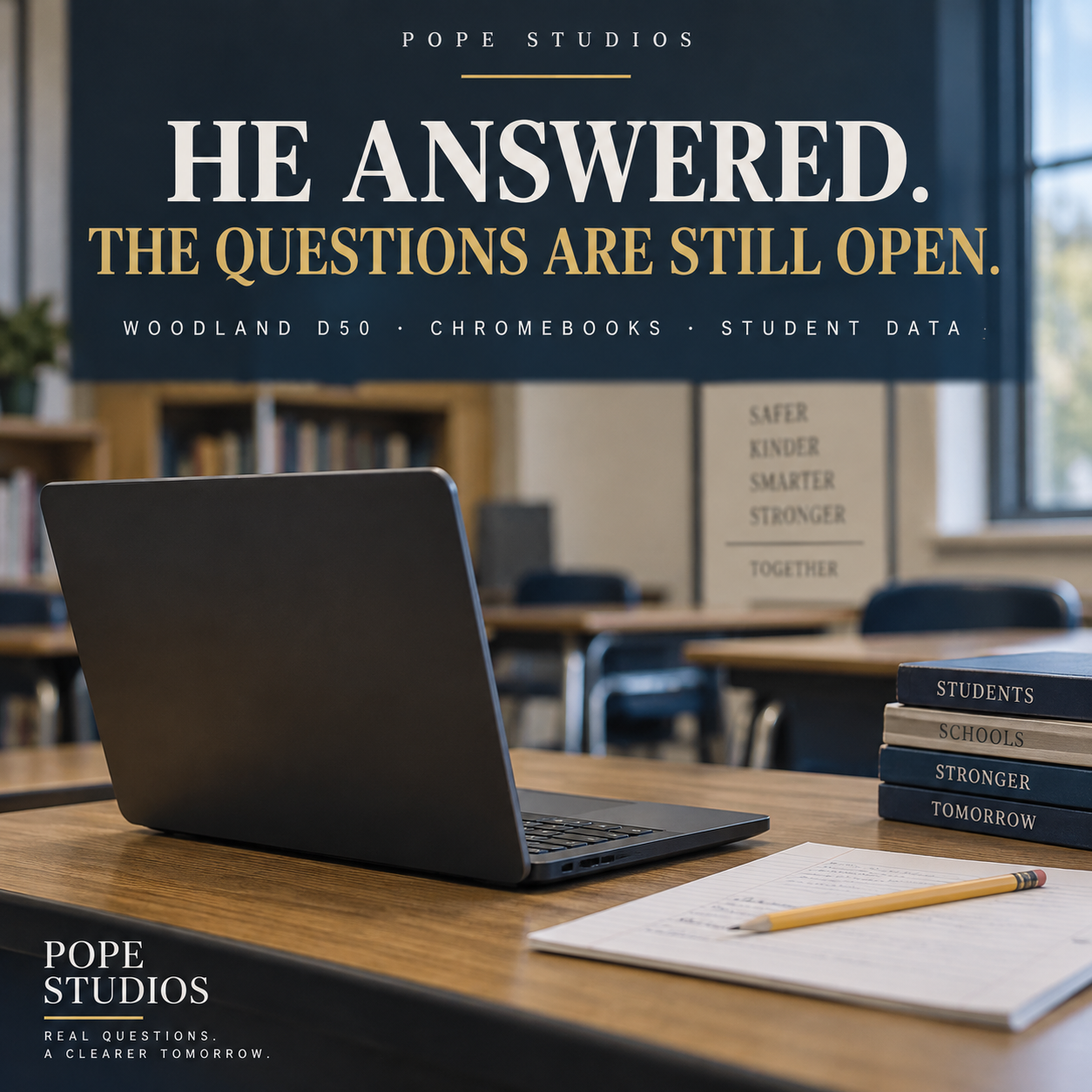
I've already questioned leadership in Zion District 6 and Woodland District 50. Woodland Superintendent Robert Machak answered questions about its institute day, and I followed up about whether teachers can choose their own professional learning, what the day costs, and how the district judges its value. On Saturday, October 10, I sent comparable requests to Waukegan 60, Warren 121, Grayslake 127, Gurnee 56, Libertyville 70, Mundelein 120, Lake Forest 115, and North Chicago 187. I also contacted Illinois State Superintendent Tony Sanders about which decisions come from the state and which are local.
I gave the newly contacted districts until October 19 to respond. As of this morning, I have no new substantive replies from those districts or ISBE. That isn't a scandal. They were contacted over the weekend, and today is a holiday. I'll report responses when they arrive and follow up fairly when they don't.
What I won't do is treat a polished email as proof that a policy works. I want to know who decided, why, what it costs, what teachers can change, and what happens to children as a result.
I also won't treat every tip as a fact. I'm receiving leads from outside Illinois, including Maryland and Mississippi. Some may lead somewhere; others may not. A claim becomes reporting only after it has been checked. I won't expose a source who asked not to be identified.
This is not a promise that every administrator is wrong. Some may have excellent reasons for what they do. I want to hear those reasons. I want to compare them. And if a district makes a persuasive case, I'll say so.
What I'm building is straightforward: Mike Pope asks questions in public. Pope Studios publishes what can be verified. You can read it, watch it, challenge it, and send me the next question.
If you're a teacher, parent, principal, board member, or district employee, tell me what deserves scrutiny. Documents and firsthand information are especially useful. You can submit a tip at https://pope-studios.com/tips.
If you want to see what happens next, follow me for free at https://pope-studios.com. You'll get the Sunday Disagreement and updates as investigations develop. You don't have to buy anything to follow the reporting.
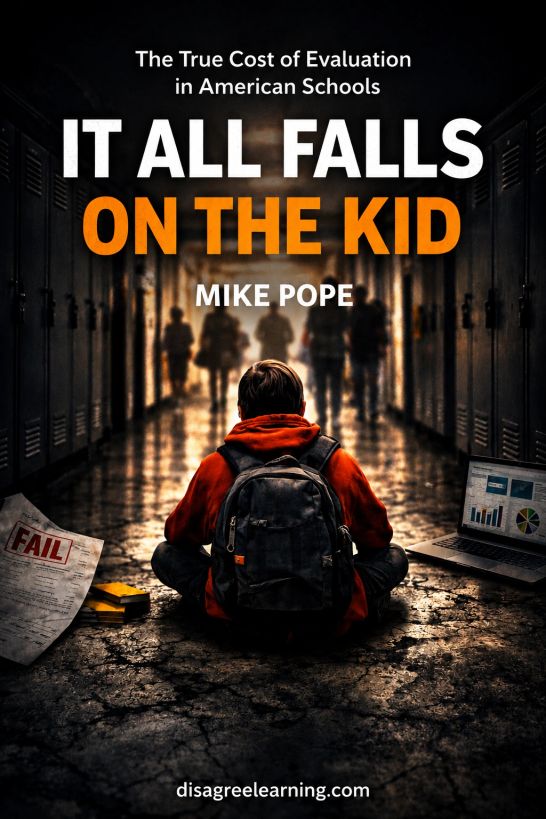
And if you want to understand why I started asking these questions in the first place, my book It All Falls on the Kid is available at https://amzn.to/4tbzYKP.
For years, people have asked who's responsible when a child doesn't learn.
I'm going to keep asking who was allowed to make the decision.
— Mike Pope