I started asking questions about ten school districts in Lake County, Illinois.
Five questions. Pretty straightforward questions, I thought.
Who decides how teachers teach? Who determines what happens on professional development days? Who controls PLCs? What happens when teachers disagree? And what happens when parents disagree?
But I didn't stop with the districts. I sent questions to Illinois State Superintendent Tony Sanders, too. He responded to all five. I read his answers, and I still wasn't satisfied with what they told me about the actual freedom schools and teachers have to make decisions.
That's a distinction worth making. A state can say districts have autonomy. A district can say teachers have autonomy. But what does that word mean when the next level of the system still decides which programs, assessments, frameworks, and procedures everyone must follow?
Some districts answered my questions. Warren's superintendent provided answers and supporting materials. Mundelein declined to participate in the voluntary questionnaire. Others had not yet completed the exchange when I began writing this. I'm continuing to seek responses, and I won't confuse a declined interview with a denied public-records request.
But something happened this week that changed the way I'm thinking about this project.
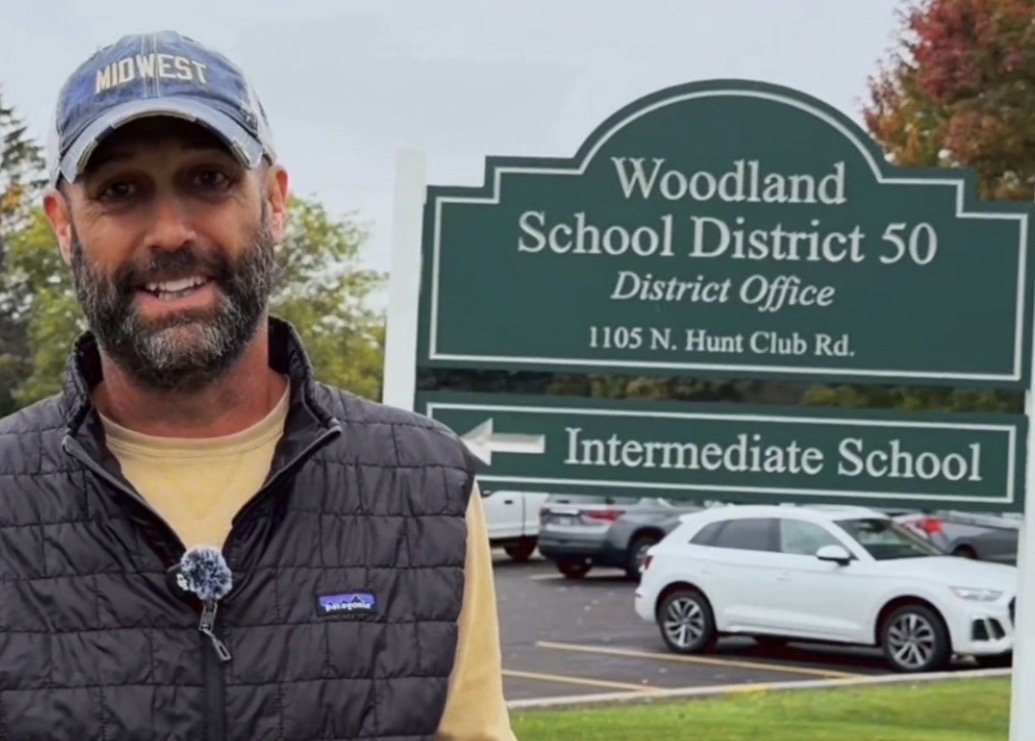
I attended a school board meeting at Woodland District 50.
Teachers showed up. They spoke about their frustrations, their concerns, and what they believe is happening to their profession.
I listened.
Then I stayed and listened to district leadership.
And I found myself thinking about something much bigger than Woodland.
What if the problem with public education isn't that the people running our schools are bad at their jobs?
What if the problem is that we've built a system where even good people have an incredibly difficult time doing things differently?
I've spent 22 years working in public education.
I've taught in classrooms. I've worked in elementary schools, middle schools, and high schools. Rural communities, affluent communities, and communities struggling with poverty.
I've worked in curriculum and student services. I've coached sports, served as an athletic director, driven a school bus, worked as an assistant principal, and been a principal. I hold a superintendent's license.
I'm not listing those things because I think I'm special.
I'm listing them because I've seen education from an unusual number of angles.
And everywhere I've worked, I've encountered people who genuinely cared about children.
I've also encountered an extraordinary amount of nonsense.
Programs nobody really believed in. Meetings nobody wanted to attend. Professional development that didn't address what teachers needed. Evaluations that produced paperwork instead of better teaching.
And layers upon layers of people making decisions for the people below them.
State agencies set requirements and expectations. District offices translate them into directives. Principals are expected to carry them out. Teachers are expected to demonstrate implementation. Students are expected to follow along.
Then each level explains that the next level still has autonomy.
Does it?
Here's what I've come to believe.
We don't have a shortage of people who want schools to improve. We have a shortage of permission to do things differently.
Think about what happens when a district adopts a new instructional framework.
Maybe it's an excellent framework.
Maybe it's terrible.
That's not even my first question.
My first question is: Who decided everybody needed it?
And why?
Then we hire people to train teachers on the framework. We create meetings to discuss implementation. We develop documents to demonstrate implementation. We observe teachers to determine whether they're implementing it correctly.
And when teachers struggle with something they may never have needed in the first place, we conclude they need more training.
Maybe they do.
Or maybe they were already doing something that worked.
Those possibilities deserve consideration before we spend another dollar.
I'm not suggesting that teachers should never receive professional development. Quite the opposite.
I think teaching needs to get better.
But we've raised a generation of educators in systems that increasingly emphasize following instructional procedures, documenting outcomes, and demonstrating compliance.
We need to make sure we're developing teachers who know how to teach, not simply teachers who know how to demonstrate that they've followed a prescribed method.
And the same principle applies to leadership.
State leaders need to examine what they actually require. District administrators need to give principals room to lead. Principals need to give teachers room to teach. Teachers need to give children room to learn, struggle, and make mistakes.
And parents need to do some of that, too.
Freedom comes with mistakes.
That's the part nobody wants to accept.
If you give people authority, sometimes they'll make decisions you wouldn't have made.
Sometimes they'll fail.
But that doesn't automatically mean the answer is another policy, another program, another evaluation, or another person supervising them.
Sometimes the answer is to let people learn.
I want to be clear about something else.
I'm not investigating schools because I hate public education.
I spent most of my adult life working in it.
And when I sit at a school board meeting and look at the people around the table, I don't automatically see villains.
I see people who may be doing what they genuinely believe is best.
But that makes the question even more important.
If so many people inside education want things to improve, why is meaningful change so difficult?
That's what I want The Pope Report to investigate.
We're going beyond Lake County.
We're going to examine how state agencies and school districts make decisions, why they purchase what they purchase, who benefits from the systems they've built, and whether those systems actually help children learn.
We're going to talk to teachers, principals, superintendents, parents, researchers, and the people selling schools their programs.
And I want to find schools doing things differently.
Schools that stopped doing something unnecessary.
Schools that trusted teachers.
Schools that gave principals more authority.
Schools that found ways to spend less money without giving children less education.
Because criticism without examining alternatives eventually becomes just another form of complaining.
And I'm not interested in spending the rest of my life complaining about schools.
I'm interested in finding out why they can't change.
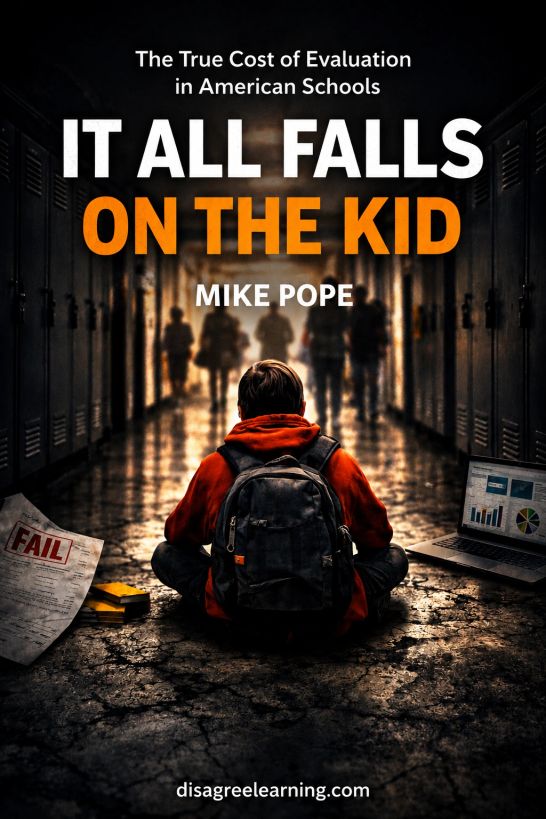
I'm writing my next book around that question.
And I hope that eventually, instead of school districts wondering why I'm asking them difficult questions, some of them will invite me in to have those conversations.
Not because I have another universal program to sell them.
But because I think many schools already know what they need to stop doing.
They just need permission.
The Pope Report started in Lake County. The questions don't end there.
And neither does the reporting.
— Mike Pope
Follow The Pope Report at https://pope-studios.com . Teachers, parents, administrators, and community members can share experiences using the site's existing reporting tip form.