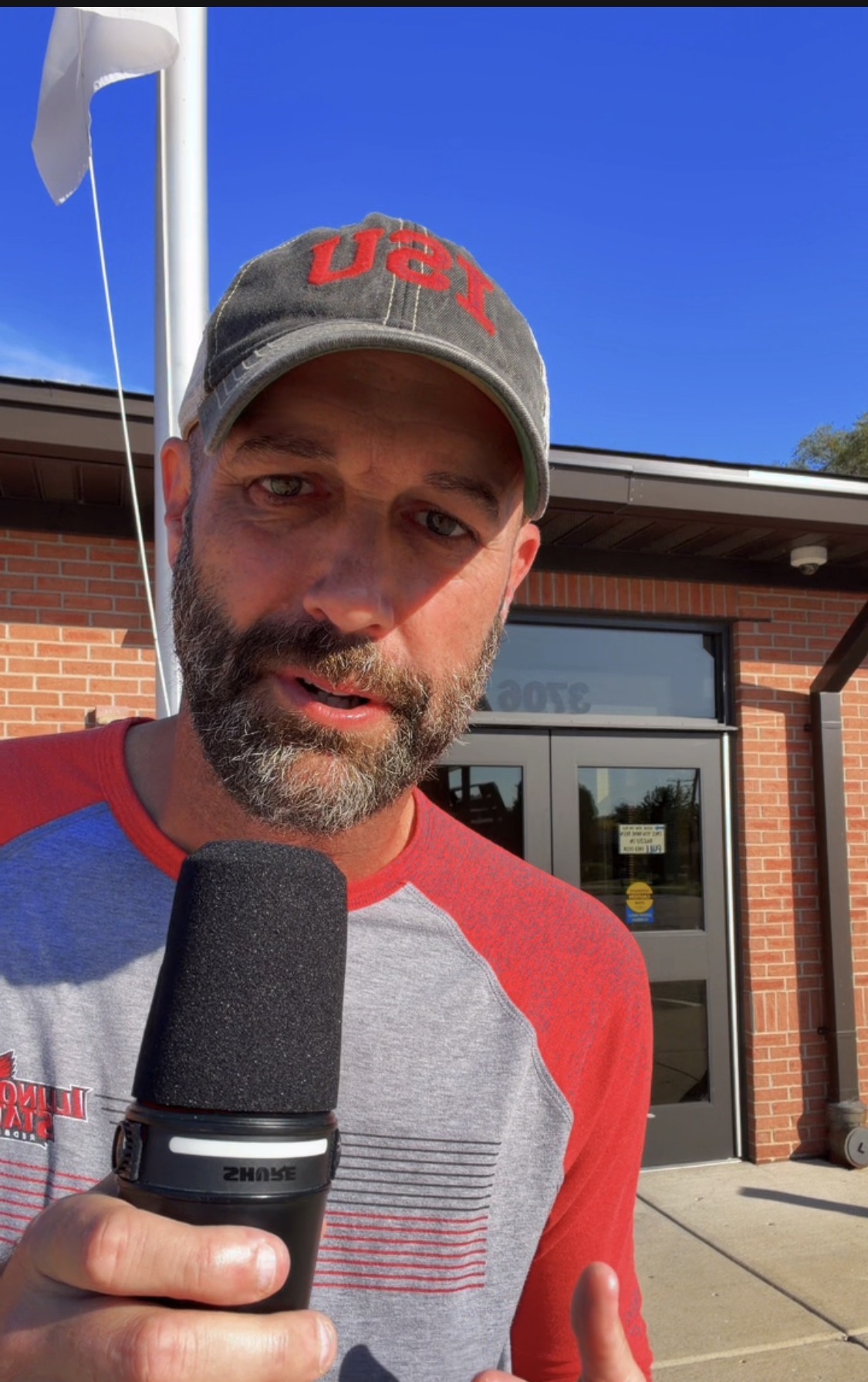
Yesterday I stood outside Gurnee School District 56 with a microphone and asked a question that ought to be simple: How much control does a teacher really have over what happens in the classroom?
That's Day 1 of the first two-week investigation I'm reporting through Pope Studios. Today is Day 2. I'm not pretending the answer arrived just because I showed up at the district office. The visit was the start of the reporting, not the conclusion.
When a child struggles, the teacher is the person who talks to the parent, explains the results and tries to help. But can that teacher choose the pace, change a lesson, question a required assessment or use professional-development time for something that actually addresses the needs of that class?
The important distinction is between responsibility and authority. A teacher can be responsible for outcomes without being free to make all the decisions affecting those outcomes. That's what I want districts to explain clearly—not through slogans about collaboration, but through specific policies and examples.
In the Gurnee video, I put that question to Superintendent Luis Correa and asked what teachers can actually do when they disagree with decisions made above them. I had previously sent questions to District 56 as part of a ten-district request. A visit and a sent email are not proof of wrongdoing, and I will not claim that District 56 denies teachers autonomy unless the records support that conclusion.
This isn't only Gurnee. I'm examining decision-making authority in Zion, Woodland, Waukegan, Warren, Grayslake, Gurnee, Libertyville, Mundelein, Lake Forest and North Chicago. I'll compare what each district says teachers control, what district administrators control and what state rules require. Those distinctions matter if parents want to know whom to approach when something isn't working.
You can watch the actual field video here: https://www.youtube.com/shorts/oU_wC8y_GaU
The next step is evidence. I want written district policies, examples of teacher discretion, and direct answers to the questions. I also want firsthand experiences from teachers and parents, supported by documents where possible. Tips are leads to investigate, not facts I automatically publish.
Here's one question I'd like readers to answer: Should school superintendents agree to public, recorded interviews about decisions they make for teachers and students? Tell me what you think. The responses won't be a scientific sample of all parents or teachers, but they can help shape the questions I ask next.
If there's a serious, time-sensitive issue in your district, send it to https://pope-studios.com/tips. I may change the next reporting stop when evidence warrants it, but I won't promise a visit before I can verify the facts and arrange it.
Follow me for free at https://pope-studios.com to see the responses, the records and what comes next. You can also read my book It All Falls on the Kid at https://amzn.to/4tbzYKP.
Yesterday I asked who gets to decide. Today I want to see the rules that answer that question. Tomorrow we'll follow the evidence.
— Mike Pope