Woodland District 50’s board meets Thursday, October 15. Before anyone claims to know what happened in that room, there are two records worth reading: the public agenda and the district’s response to my Chromebook records request.
One tells us what the board plans to discuss. The other tells us which existing records the district says it has—and does not have—in response to specific questions. Neither should be stretched into a conclusion it cannot support.
When and where
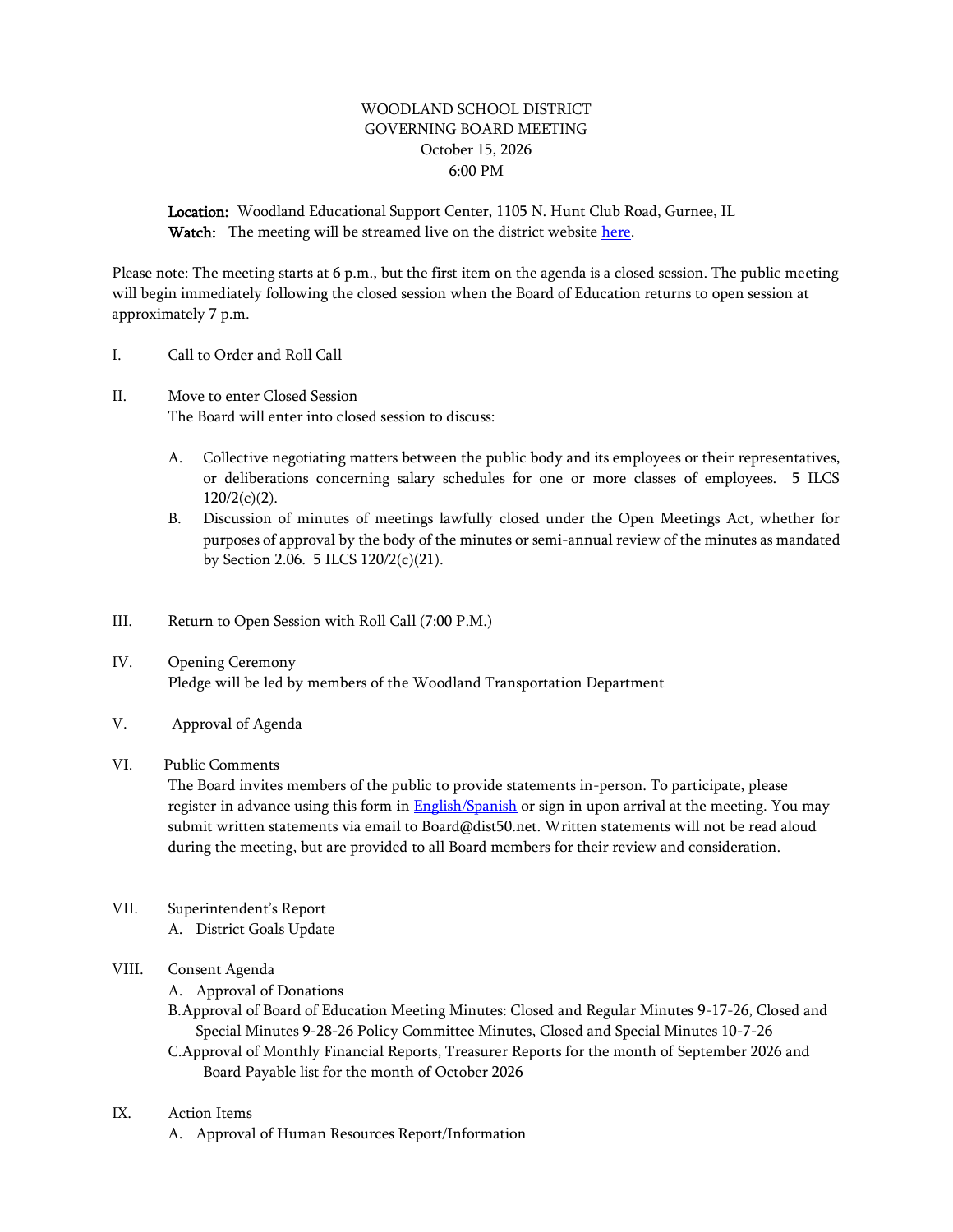
The posted agenda lists a 6 p.m. start at the Woodland Educational Support Center, 1105 N. Hunt Club Road in Gurnee. Closed session comes first. The district says the public meeting will begin when the board returns to open session at approximately 7 p.m. Central.
The agenda includes public-comment opportunities, a district-goals update, a K–5 literacy presentation, a human-resources action item, and reports on student services, enrollment and technology. It also lists a written report on a revised technology purchase described as “Macbook Neos.” These are scheduled items, not decisions that have already been made.
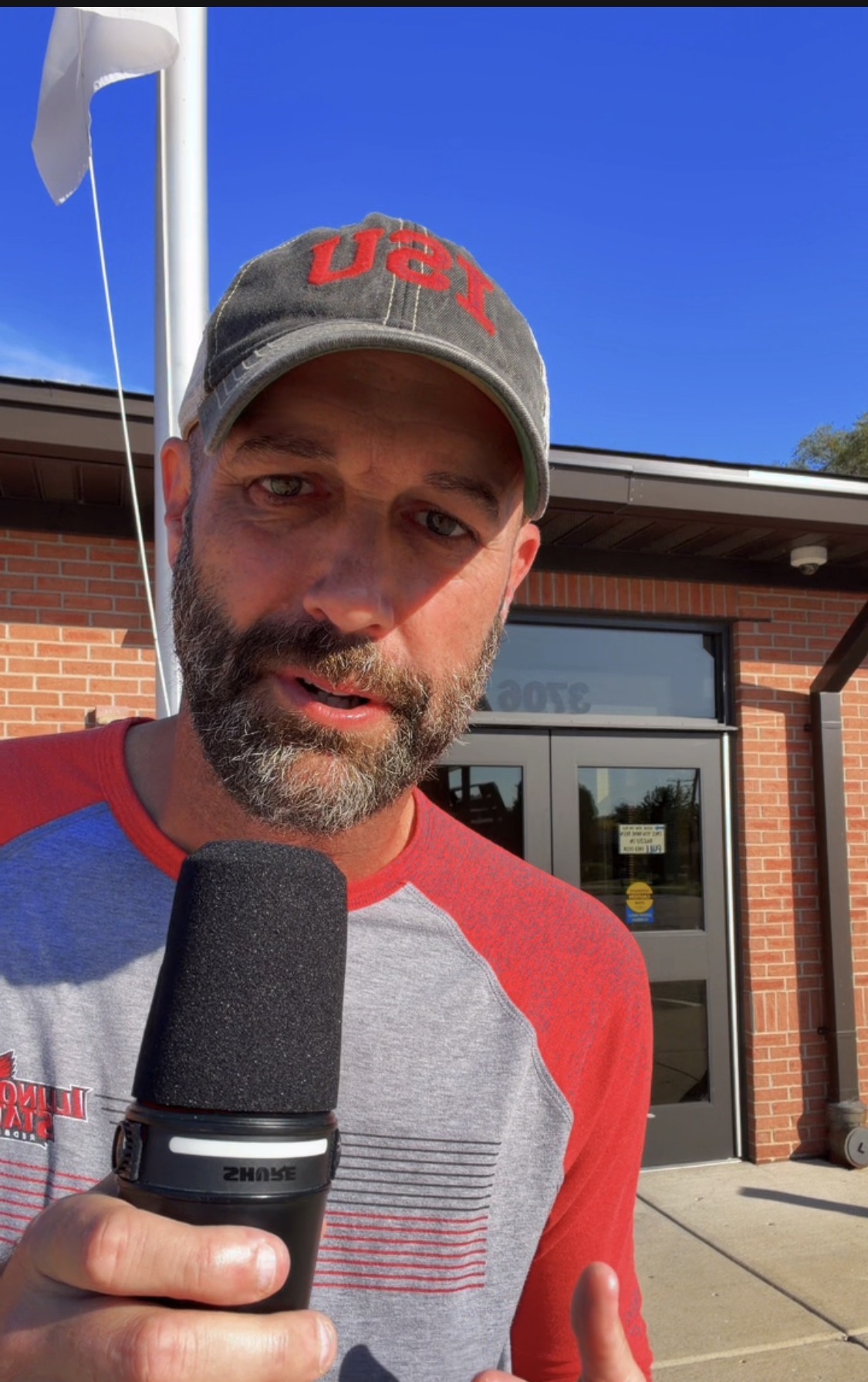
I plan to cover the meeting as an independent reporter and speak with willing participants. I am also a Woodland parent with three children in the district. Whether I make a public comment is not the point of this advance report; the point is to establish the record before the meeting.
What the Chromebook response actually says
On October 13, the district answered my October 5 Freedom of Information Act request concerning Chromebooks, monitoring, student data and educational benefit. The response is signed by Christopher Bobek, the district’s associate superintendent, CSBO and Freedom of Information Officer.
For requests 1 through 4, the district directed me to its SOPPA Compliant NDPA Agreements spreadsheet. Those requests concerned monitoring and filtering services, the data those tools collect or expose, student-level instructional-platform data, outside vendors and retention policies. A link was supplied. That does not by itself establish that every question about every product has been resolved.
For requests 5, 6 and 7, the letter gives the same answer: “There are no records responsive to your request.” The scope matters.
Request 5 sought records created or received from January 1, 2024 onward assessing, discussing or measuring the educational effectiveness or benefit of the Chromebook program, including one-to-one and take-home use. Request 6 sought records from the same period comparing educational benefits against concerns about screen time, attention, privacy, monitoring, data collection or student well-being.
Request 7 sought existing policies, procedures, forms or guidance showing whether a parent could opt a student out of particular monitoring, filtering, tracking, logging or vendor-data collection while the student continued to participate fully in the educational program.
What that does not prove
The response is not proof that Chromebooks never help a child. It is not proof that no staff member has ever considered their benefits. It does not establish that monitoring occurs in every place or at every hour, and the answer to request 7 does not establish by itself that no opt-out is possible.
It establishes a narrower, reportable fact: in answering these particular requests, including the stated date limits for requests 5 and 6, the district reported no responsive records for those three categories. The next step is to ask what evidence informs the program and how families can get clear answers about their choices.
Nor should the agenda be misrepresented. It does not promise a stand-alone Chromebook hearing or an answer to every question in my records request. A technology item is an opportunity to examine a decision—not evidence that an issue has already been resolved.
The questions I am taking into the reporting
When a district chooses a device, instructional platform, curriculum or professional-development program, what problem is it trying to solve? Who made the choice? What evidence supported it? What did it cost in money and professional time? What would count as a meaningful improvement for children?
For teacher professional development, my question is similarly concrete: how are needs identified, what discretion do teachers have, and how does the district determine whether the time improves instruction? These are reporting questions. I am not claiming the October 15 agenda already contains the answers.
In yesterday’s report, Illinois State Superintendent Tony Sanders said many instructional decisions are local. That makes local records and local explanations more important, not less. A state requirement, a district choice and an individual teacher’s discretion are different things. The reporting needs to distinguish them.
What comes after the meeting
I will report documented comments and outcomes after the meeting. Until then, I will not turn a planned interview into a completed one, an anonymous allegation into a fact, or an agenda item into a vote.
If you have a relevant document or firsthand information, use https://pope-studios.com/tips. Do not send protected student records or material you are not authorized to share. Follow the investigation free at https://pope-studios.com.
My book It All Falls on the Kid examines the larger question behind this reporting: who makes the decisions, and who carries the consequences? It is available at https://amzn.to/4tbzYKP.