The forecast began as a possibility. Snow after dark. Three to six inches. Wind from the northwest. By breakfast, it had become a town-wide assignment. People who had gone to bed needing nothing woke with an urgent responsibility to purchase bread, milk, eggs, batteries, windshield fluid, and enough ground beef to survive the temporary closure of a road they did not intend to use.
The storm had not reached Maroa. The sky was pale and undecided. Main Street remained dry. Still, the grocery store parking lot filled as if weather itself had announced a limited-time sale. Carts appeared from both sides of the building. Neighbors who had not spoken since the last storm met beside the automatic doors and immediately compared preparations.
The bread aisle becomes official
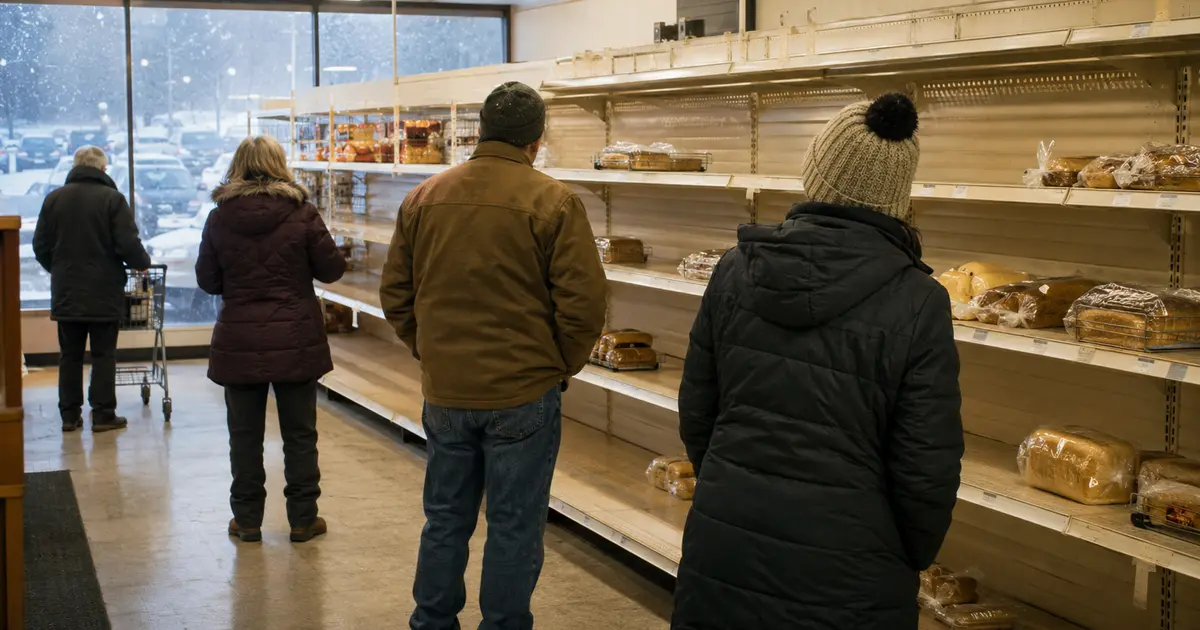
Bread always goes first. No one knows why. A family that uses half a loaf in a normal week will buy three when the forecast turns blue. Perhaps snow creates sandwiches. Perhaps people imagine that a plow delay will end commercial baking. Whatever the reason, the bread aisle becomes the clearest public measure of concern.
By ten, white bread was gone. Wheat lasted another twenty minutes because optimism has limits. Hamburger buns were taken next by people willing to adapt. Hot dog buns disappeared after shoppers agreed they could hold almost anything if folded correctly. One package of pitas remained untouched, regarded as an emergency too unfamiliar to begin during a storm.
Employees brought out cases from the back while shoppers watched with the focused patience of people waiting for concert tickets. A woman took two loaves and then returned one, explaining to nobody in particular that other families needed bread too. Ten minutes later, she came back for it because her husband had texted that the grandchildren might visit.
Preparation becomes a public language
At the hardware store, snow shovels stood near the register even though most garages in town already contained two. Ice melt was stacked in bright bags. Men who owned tractors discussed whether this was a tractor storm, a snowblower storm, or merely a shovel storm being exaggerated by television people who did not understand open fields.
At the gas station, drivers topped off tanks that were already three-quarters full. They cleaned windshields and studied the western sky. Every person had access to the same forecast, but the real report came from someone’s uncle outside Springfield, a cousin near Decatur, or a friend who drove a truck and had seen the weather firsthand somewhere it had already happened.
The town did not panic in silence. It narrated every decision. People explained why they had come out, why the forecast was probably wrong, and why it was still wise to be ready. The contradiction caused no trouble. Doubting the storm and preparing excessively for it were not opposing positions. They were the two required parts of winter citizenship.
Then the first flakes arrive
Near four, the sky finally committed. Snow crossed the fields in thin, fast lines. Sidewalks turned white. Porch lights came on early. The people who had spent the day preparing went to their windows and acted surprised that the forecast had produced weather.
Soon the town moved into its second system. Trucks with plows appeared. A teenager knocked on doors with a shovel and an hourly rate invented on the walk over. One neighbor cleared the sidewalk in front of the next house because he was already outside. Another delivered soup. A third posted a road update before the county could name the road.
By morning, the storm total was four inches. Enough to cancel a few plans. Not enough to threaten the bread supply. The roads opened. The grocery store received another delivery. Families ate eggs because they had purchased eighteen of them and made toast because principle required it.
Nothing about the preparation had been efficient. Much of it had not been necessary. But the storm gave the town a subject, a reason to call, and a small shared problem everyone knew how to help solve. By Sunday afternoon, the snow was already shrinking from the pavement. The extra milk remained. The stories lasted longer.